


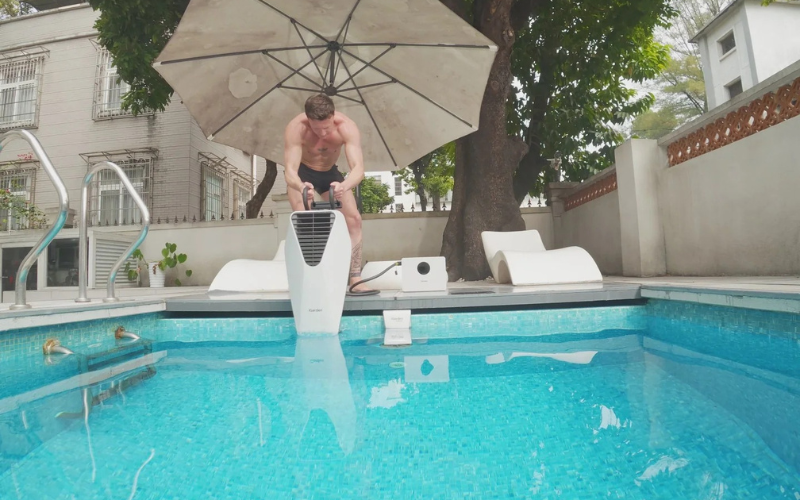
A portable swim jet gives you more flexibility than a permanently installed system. You can use it for a workout, remove it afterward, and store it away when the pool is not in use.
That flexibility is useful, but good storage habits still matter.
A swim jet contains electrical parts, a motor, a battery system, and surfaces that spend time around pool water. Moving it carefully can help protect the equipment and make each setup easier.
The process does not need to be complicated. A few simple habits can make a big difference.
Let the Unit Drain Before Moving It
Do not move a swim jet immediately after taking it out of the water.
Give excess water time to drain first.
Water trapped around the unit adds weight. It can also drip across the pool deck or storage area. This creates a slipping risk.
Place the unit in a stable position near the pool for a short period. Allow water to leave the housing naturally.
You can also wipe the outside with a clean towel.
There is no need to make every surface completely dry before moving it a short distance. However, removing most surface water makes transport cleaner and safer.
Use the Wheels Instead of Lifting Whenever Possible
Portable does not always mean light enough to carry comfortably.
A swim jet contains a motor and other substantial components. Even if you can lift the unit, repeated lifting may not be the easiest way to move it.
If the system has built-in wheels and a handle, use them.
Treat it more like rolling luggage than a small pool accessory.
Keep the unit upright while moving it across a flat deck. Pull it at a controlled pace. Avoid sudden turns.
This reduces strain on your back and makes the equipment easier to control.
It also reduces the chance of dropping the unit.
Be Careful Around Steps and Uneven Surfaces
Wheels work best on smooth surfaces.
Pool decks often include joints, drains, raised edges, and small steps. Outdoor paths may include grass, stone, or rough concrete.
Slow down when moving across these areas.
Do not pull the unit quickly over a high edge. The impact could place unnecessary stress on the wheels or housing.
For stairs, it is safer to use proper lifting assistance rather than trying to drag the equipment up or down.
Plan the route before moving the unit.
A clear path from the pool to the storage area makes regular use much easier.
Move the Power Box Separately
One useful approach is to treat the swim unit and power box as separate items during transport.
This makes each part easier to manage.
It is especially useful with higher-capacity models because larger batteries can add noticeable weight.
For example, within the iGarden Swim Jet X Series, the X AIR can be a practical choice for users who expect to move their setup frequently. Its power box is lighter than the one used with the higher-output X PRO 10.
The X 5 sits between these two types of use. It can make sense for swimmers who want stronger training performance without automatically choosing the highest-output option.
The X PRO 10 is more suited to users who put training performance first. If you choose that model, it is worth planning a short and simple storage route because the larger power system is less convenient to move repeatedly over long distances.
This is a good example of why portability is not only about the main unit. Accessories and power components also affect everyday handling.
Choose a Dry Storage Location
When the swim jet is not being used, a protected storage area is usually preferable to leaving it beside the pool for long periods.
A garage, pool equipment room, or storage shed can work well.
Choose a location that stays reasonably dry.
Avoid areas where rainwater collects on the floor. Do not place the unit where lawn irrigation regularly sprays it.
Protection from direct sunlight is also helpful during long storage periods.
Poolside equipment often faces strong UV exposure. Heat can also build up when equipment sits in direct sun for many hours.
Moving the system into a protected area between long periods of use reduces unnecessary environmental exposure.
Keep the Storage Space Easy to Access
A perfect storage location is not useful if moving the swim jet there is difficult.
Think about convenience.
If you use the current several times each week, storing it at the opposite end of the property may quickly become annoying.
A nearby garage or poolside storage room may be more practical.
Try to avoid narrow spaces filled with other equipment. You should be able to roll the unit in and out without hitting tools, furniture, bicycles, or other objects.
Leave enough room around the unit to handle it comfortably.
Easy storage encourages you to actually put the equipment away.
Protect the Unit From Scratches and Impacts
A storage bag or protective cover can be useful if the swim jet is moved often.
It can help protect exterior surfaces from dust and minor scratches.
This is especially useful in a busy garage.
Do not stack heavy objects on top of the unit. Avoid leaning sharp tools against it.
You should also keep the intake and outlet areas clear.
These parts need unobstructed water movement during operation. Storage is a good time to check that leaves or other debris have not become trapped around them.
Think About Battery Storage Too
Portable swim jets with battery-powered systems need some additional attention.
Keep the power box in a suitable environment. Avoid exposing it to extreme temperatures when possible.
Do not place it close to heaters or other strong heat sources.
Before long periods without use, follow the manufacturer’s battery storage and charging instructions.
Battery care matters because long-term storage is different from leaving the equipment unused for only a day or two.
This is especially important at the end of the swimming season.
Make Setup and Storage Part of One Routine
The easiest way to manage portable pool equipment is to develop a routine.
Before swimming, roll the unit to the pool and position it correctly.
After swimming, turn the system off and remove it according to its operating instructions.
Let excess water drain.
Check for visible debris.
Wipe the surfaces if needed.
Then roll the unit back to its storage location and place the power components in their normal spot.
Once this becomes familiar, moving the swim jet feels like a normal part of pool use rather than a major task.
Portability Works Best When Storage Is Planned
The main advantage of a portable swim jet is flexibility.
You are not committing the pool to a permanent installation. The equipment can be available when you want to swim and stored away when you want a more open pool area.
That flexibility becomes much more useful when storage is simple.
Choose a short transport route. Use wheels instead of unnecessary lifting. Keep the equipment protected from prolonged weather exposure. Give every component a dedicated storage location.
You should also think about portability when selecting a model. More training power may be useful, but a lighter supporting setup may be more convenient for someone who moves the equipment after every session.
The best arrangement is the one that fits your normal pool routine.
When moving and storage require little effort, a portable swim jet is much easier to use regularly.