


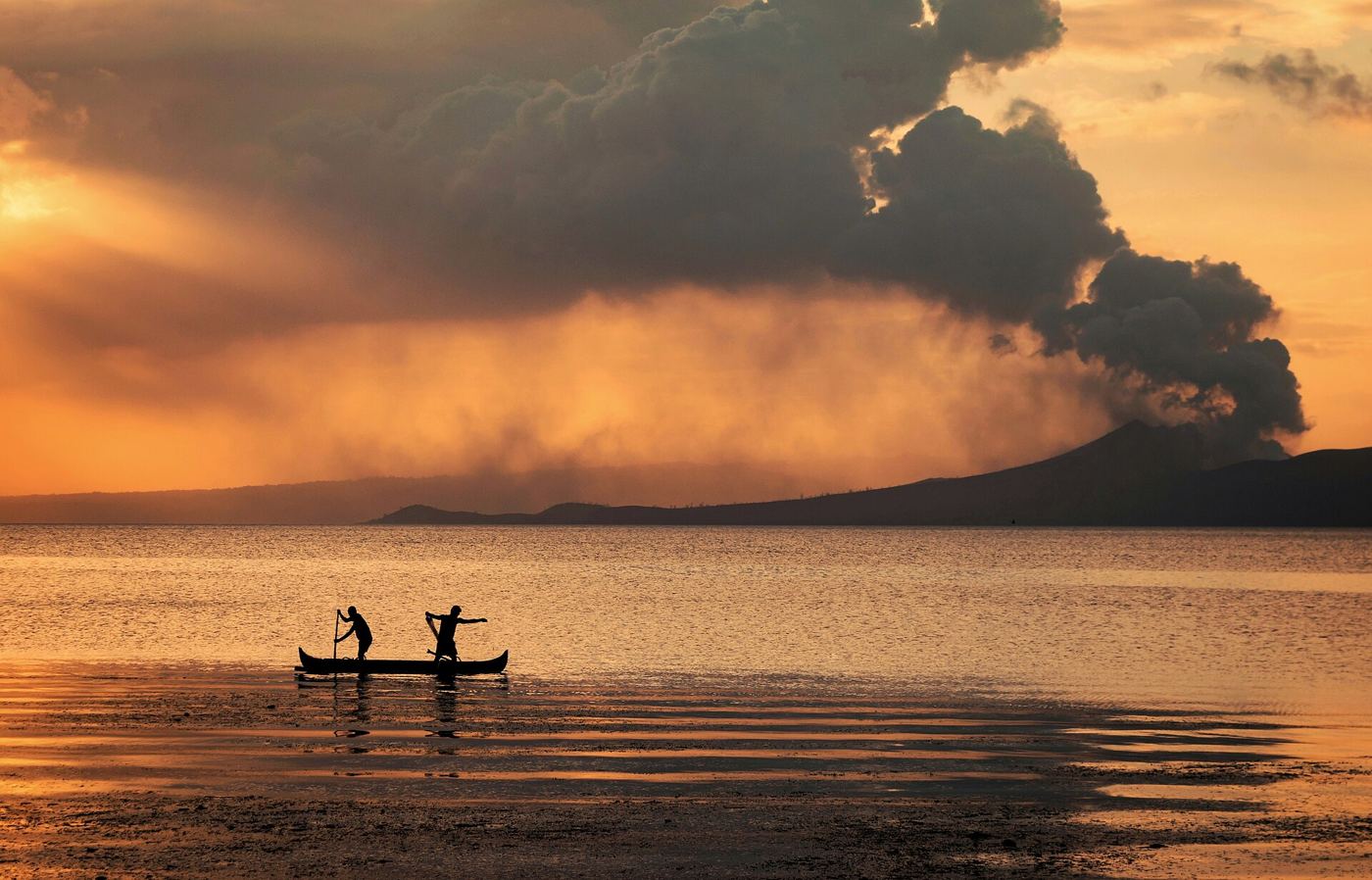
When a volcano erupts, the ash it throws into the sky is usually seen as a disaster, darkening skies, closing airports and burying farms under grey dust. Yet when that ash falls into the sea, it can trigger an explosion of life. Volcanic ash is rich in iron and other minerals that ocean plankton need to grow, and in many parts of the ocean those nutrients are scarce. A large eruption can spread ash across thousands of square kilometres of sea, and within days the water turns green with blooms of microscopic algae feeding on the new nutrients. The blooms feed tiny animals, which in turn feed fish, and researchers have tracked the chain reaction for months after major eruptions. Satellite images have shown vast green patches appearing in the ocean after eruptions in Alaska, the Pacific and the Southern Ocean, each one a burst of growth in waters that were nearly empty before.
What the Evidence Shows
The blooms raise a tempting question: could humans fertilise the ocean deliberately to grow plankton and draw carbon dioxide out of the air? Experiments that scattered iron into the sea did produce blooms, and some carbon sank with the dead plankton to the deep ocean. But the results were modest, and scientists warn that large-scale fertilisation could harm marine life by creating dead zones or shifting the balance of species. The natural eruptions offer a safer way to study the process, since the ocean has absorbed volcanic ash for millions of years without human help. Researchers now rush to eruption sites with ships and sensors, sampling the water as the bloom grows and fades. The work helps them understand how the ocean stores carbon, and how the great eruptions of the past may have shaped the climate of the Earth. Reporting and analysis from sources such as National Science Foundation track the same developments, and specialists following volcanic ash feeding ocean life after eruptions say the direction is now consistent across independent lines of evidence.
The Wider Context
The wider context is a research landscape in which replication and open data now decide reputations. Findings connected to volcanic ash feeding ocean life after eruptions are being checked by independent groups with shared datasets, and the teams involved publish their methods in full so rivals can test every step. That discipline is slower than a headline cycle, but it is why results in this area increasingly survive first contact with scrutiny.
What Happens Next
What happens next in the story of volcanic ash feeding ocean life after eruptions will be decided by follow-up work already under way: larger samples, longer observation and instruments that have not yet come online. The researchers involved are unusually united on one point, that the current results justify the next investment of time and money. Readers will not have to wait long for the first tests of that claim. You can follow related developments in our coverage of science.
There is a practical lesson in all of this for readers deciding what to do today. Start with the verified facts, be wary of anyone promising certainty, and prefer reversible steps while the evidence is still developing. Circumstances differ by country, income and personal situation, so general guidance should always be weighed against your own context before you act on it in any significant or lasting way.
